
Why Do Wasps Exist? Why are they important? Can I Convince You to Love Them?
Or, if “love” feels like a stretch, could we agree to tolerate them?
Wasps have a bit of a public relations problem.
Bees are welcomed into our gardens with wildflowers, bee hotels and cheerful pictures. A wasp appears near the picnic, however, and suddenly everyone is waving their arms, guarding the jam and planning a very hurried retreat.
But is that rather unfair?
Wasps are pollinators, pest controllers and an important part of a healthy ecosystem. They may not be as fluffy as bees, and their table manners leave something to be desired, but they do far more good than many of us realise.
So, before you reach for the rolled-up newspaper, allow me to present the case for the wasp…

First, let’s admit it: wasps can be annoying
There is no point pretending otherwise. Some social wasps can sting, they may defend their nests and, by late summer, they can become rather determined visitors to picnics, barbecues and outdoor drinks.
There is a reason for this behaviour.
Adult wasps feed mainly on sugar. Earlier in the summer, worker wasps hunt caterpillars, aphids, flies and other small invertebrates to feed the growing larvae in their nest. In return, the larvae produce a sugary liquid that the adults eat.
As summer draws to a close, the colony begins to wind down and there are fewer larvae to feed—and less of that sugary reward available. The workers start looking elsewhere for energy. Ripe fruit, nectar, fizzy drinks, ice lollies and your lovingly prepared jam sandwich suddenly look extremely appealing.
They are not plotting to ruin lunch. They are hungry insects following the smell of an easy meal.
The wasps at your picnic are only part of the story
When most of us picture a wasp, we imagine the familiar yellow-and-black common or German wasp. Yet there are more than 7,000 species of wasp in the UK, including an enormous variety of solitary and parasitoid wasps.
Many are tiny, live alone and are very unlikely to sting people. Some are so small or unobtrusive that you may have shared your garden with them for years without noticing.
In other words, judging all wasps by the few that investigate our lemonade is rather like judging every bird by the seagull that stole your chips.
Five reasons wasps deserve a better reputation
1. They are brilliant natural pest controllers
Social wasps collect huge numbers of other invertebrates to feed their young, including caterpillars, greenfly and flies. The Natural History Museum estimates that social wasps in the UK capture around 14 million kilograms of insect prey each summer.
That makes them very useful gardening assistants. They work for free, require no instructions and never ask to borrow the wheelbarrow.
Without predators such as wasps, the creatures that feed on our plants could multiply far more freely. Wasps help to keep populations balanced and form an important link in the food web.
2. They pollinate flowers
Wasps visit flowers for sugary nectar. As they move between blooms, pollen can travel with them, so they help to pollinate plants too.
They are generally less hairy than bees and may not be quite as efficient at carrying pollen, but that does not make their contribution unimportant. Research shows that wasps visit a wide range of plants, and some plants have especially close relationships with particular wasp species.
Bees may be the famous pollinators, but they are certainly not the only members of the team.
3. They are food for other wildlife
Wasps and their larvae are eaten by animals including birds, spiders, dragonflies, frogs and other insects. Remove one creature from an ecosystem and the effects can travel along the food web. A healthy garden needs predators and prey—even when some of them have stripes and a sting.
4. Their nests are rather incredible
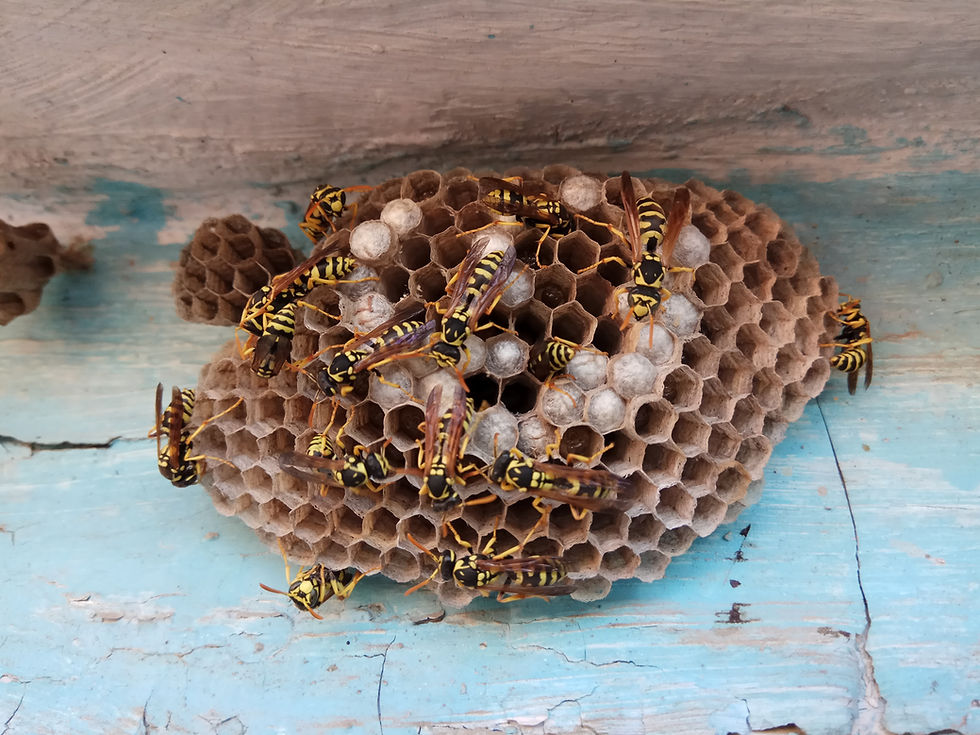
Social wasps make paper before humans ever did. They scrape tiny fibres from weathered wood, chew them with saliva and use the pulp to build intricate nests containing neat, hexagonal cells.
Please admire an active nest only from a safe distance: wasps are particularly defensive around their home. But as feats of insect engineering go, a wasp nest is extraordinary.

5. Most wasps are not looking for a fight
A wasp’s sting is a tool for catching prey and defending itself or its nest. It does not gain anything from chasing humans for entertainment.
Social wasps are more likely to sting when they feel trapped, threatened or when their nest is disturbed. Staying calm and giving them space is far safer than flapping, swatting or trying to touch them.
How can we help wasps?
Helping wasps does not mean inviting a colony into the kitchen or encouraging children to handle them. It can be as simple as allowing these useful insects to get on with their lives when it is safe to do so.
Grow a variety of nectar-rich flowers that bloom from spring into autumn.
Avoid using pesticides unnecessarily; they can kill helpful predators as well as the insects being targeted.
Leave an out-of-the-way nest alone if it poses no risk. Social wasp nests naturally die out later in the year and are not reused the following season.
Keep bin lids closed and clear away fallen, overripe fruit if wasps are gathering where children play.
Cover sweet food and drinks outdoors, and use cups or bottles where children can see what they are about to sip.
Never block the entrance to an active nest or attempt to move or destroy it yourself. If a nest is in a busy or unsafe place, seek advice from a reputable pest professional.

Helping children feel calm around wasps
Children often copy our reactions. If we shriek and start swatting, “wasp” quickly becomes another word for “panic”. We can teach caution without teaching fear.
Try these simple rules:
Be still and stay calm. Do not wave, hit or chase the wasp.
Give it space. Step away slowly and let it find an exit.
Look, don’t touch. Observe wasps on flowers from a sensible distance, with an adult nearby.
Check before you sip. Wasps can crawl into cans, bottles and cups outdoors.
Keep away from nests. Never poke a nest, block its entrance or stand in the insects’ flight path.
You could turn wasp-watching into a mini nature activity. From a safe distance, ask:
Is the wasp drinking nectar or searching for prey?
Which flowers does it visit?
Can you spot the difference between a smooth, slender wasp and a hairier bee?
Can you find a harmless hoverfly pretending to be a wasp?
The aim is not to encourage children to get closer. It is to replace panic with calm curiosity.

What if someone is stung?
Most insect stings are not serious and improve within a few days, but they can be painful. Follow current NHS guidance: wash the area with soap and water and use a cold pack wrapped in a cloth for swelling. Seek urgent medical advice for concerning symptoms, multiple stings, or a sting in the mouth, throat or near the eyes.
Call 999 immediately if there are signs of a serious allergic reaction, such as swelling of the lips, mouth, throat or tongue, difficulty breathing, tightness in the throat, severe dizziness, confusion or collapse.
Anyone with a known allergy should follow their own medical action plan.
So…have I convinced you?
Perhaps you will never feel the same affection for a wasp as you do for a bumblebee. That is all right. Wasps are not asking for a cuddle.
But the next time one arrives at your picnic, remember what it may have been doing before it spotted your jam: hunting plant-eating insects, feeding its colony, visiting flowers and helping to keep nature in balance.
Stay calm, cover the cake and give it a little space.
Love may take time—but tolerance is a very good place to start.


